
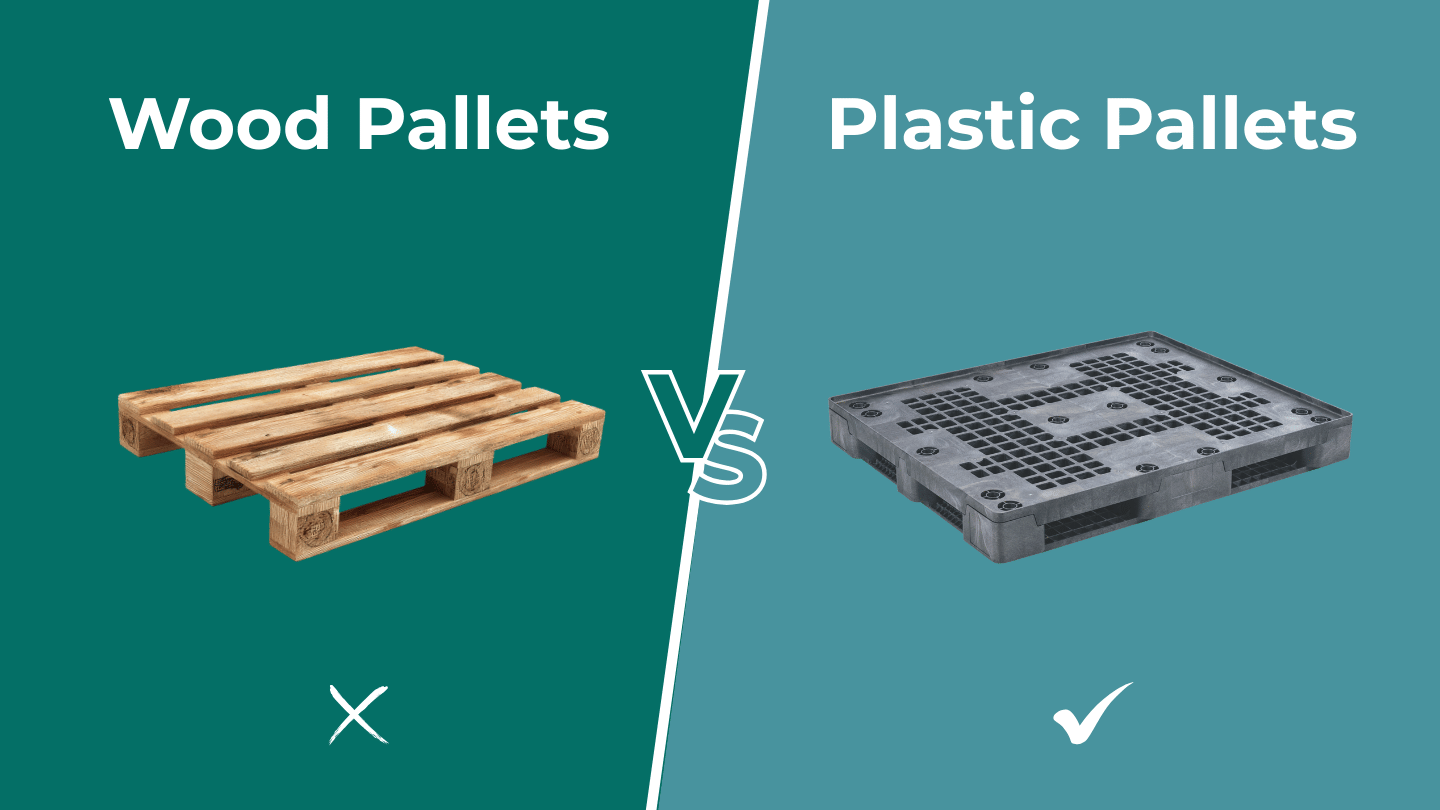
Wood pallets dominate supply chains at 90 % market share due to low upfront costs, but they typically fail after just 11 cycles and require frequent replacement, while plastic pallets cost 3x more initially but deliver 250+ cycles and lower per-trip costs in closed-loop systems. Plastic pallets offer superior durability, automation compatibility, consistent tare weights, and hygiene standards critical for regulated industries, making them more cost-effective over a decade despite higher capital investment. The choice between materials ultimately depends on whether organizations prioritize.
Supply chain managers face persistent challenges in selecting pallets that balance upfront costs, durability, and sustainability amid rising demands for efficiency. Traditional wood pallets, used by approximately 90 percent of shippers, generate substantial waste through frequent replacements. This guide delivers a comprehensive comparison of plastic and wood pallets, highlighting how ORBIS reusable plastic solutions optimize long-term performance and reduce total ownership costs.
Introduction to Plastic vs. Wood Pallets
Pallets serve as the fundamental unit of load in supply chains globally, yet the choice of material significantly impacts operational efficiency and total cost. When transporting goods, we find that companies primarily choose between two materials: traditional wood and reusable plastic. While wood has historically been the standard option due to low initial availability, plastic pallets have emerged as a superior alternative for closed-loop systems.
The decision between these materials affects everything from transport costs to product safety. We analyze these options not just by their price tag, but by their performance in automated systems, durability under stress, and environmental footprint. Understanding the distinct advantages and limitations of each material allows us to optimize supply chains for long-term value rather than short-term savings.
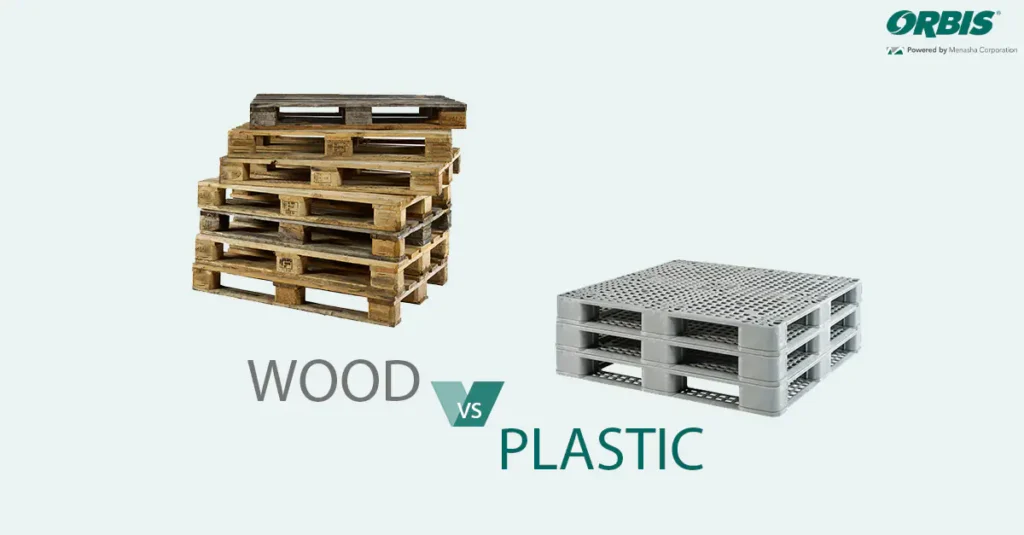
What Are Wood Pallets?
Wood pallets remain the most ubiquitous transport platform in the world, largely due to their low barrier to entry. Typically measuring 40” x 48”, these pallets generally weigh between 30 and 70 pounds and can handle loads up to 3,000 pounds. They are constructed from lumber and nails, making them easy to repair if a slat breaks.
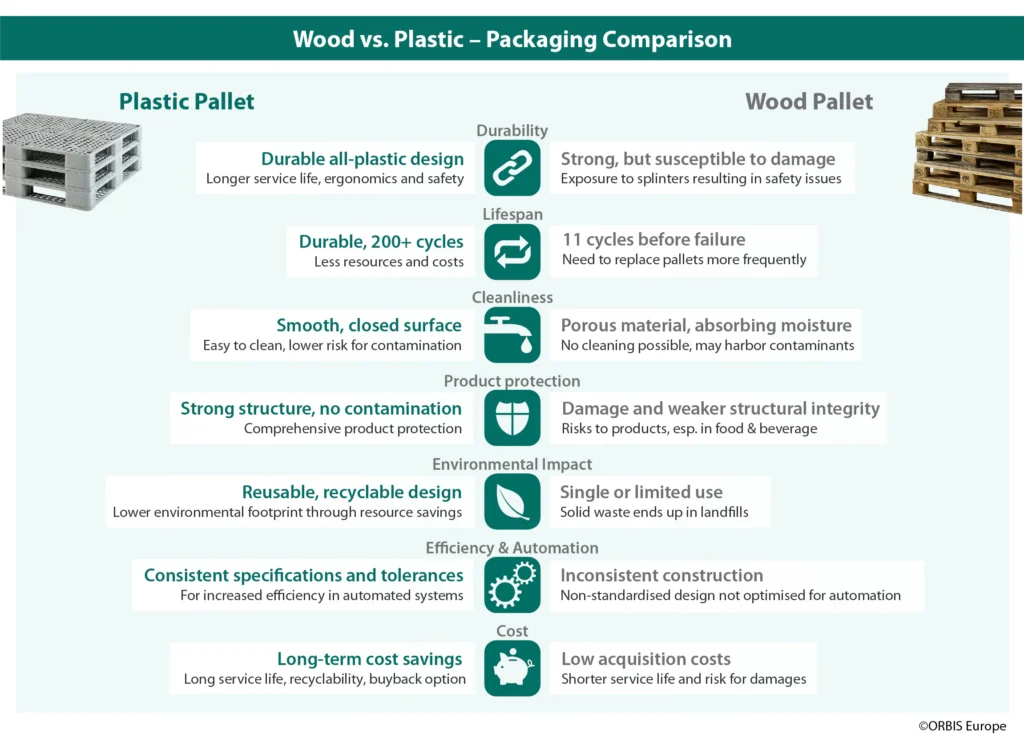
However, their construction presents inherent variability. Wood is a natural material subject to warping, splintering, and moisture absorption. In our experience, this inconsistency can cause issues in highly automated environments where precise dimensions are critical. While they are widely available, their structural integrity degrades with each use, often leading to frequent replacement or repair cycles compared to alternative materials. According to the National Wooden Pallet and Container Association, wooden pallets typically last 5-10 trips before requiring repair or replacement, making them less cost-effective over extended use periods.
What Are Plastic Pallets?
Plastic pallets are engineered products, typically molded from high-density polyethylene (HDPE) or polypropylene (PP). Unlike wood, these pallets are manufactured to exact specifications, ensuring consistent weight and dimensions every time. They can weigh as little as 3 pounds for light-duty export models, though reusable heavy-duty versions are more substantial.
We design these pallets to resist the common failures of wood, such as rot, rust, and splintering. Their non-porous surface prevents moisture absorption, maintaining a consistent tare weight throughout their lifespan. This consistency is vital for tare weight calculations in shipping. Furthermore, plastic pallets are often molded as a single piece or assembled with robust mechanical connections, eliminating the risk of loose nails or fasteners damaging products or equipment.
Ready to optimize your supply chain?
How Pallets Function in Supply Chains
Pallets facilitate the movement of goods through every node of the supply chain, from manufacturing plants to retail distribution centers. In practice, the material choice dictates how efficiently these nodes operate. Plastic pallets offer unique functional advantages, particularly in reverse logistics and automation.
- Nesting efficiency: A full truckload can hold up to 1,500 nestable plastic pallets compared to only 450 wooden ones, significantly reducing return transport costs.
- Automation reliability: Plastic pallets maintain consistent dimensions, preventing jams in automated storage and retrieval systems (AS/RS).
- Tare weight stability: Plastic does not absorb water, ensuring freight costs remain predictable regardless of weather conditions.
We design these pallets to resist the common failures of wood, such as rot, rust, and splintering. Their non-porous surface prevents moisture absorption, maintaining a consistent tare weight throughout their lifespan. This consistency is vital for tare weight calculations in shipping. Furthermore, plastic pallets are often molded as a single piece or assembled with robust mechanical connections, eliminating the risk of loose nails or fasteners damaging products or equipment.
Durability: Plastic vs. Wood Longevity
The most significant differentiator between plastic and wood is lifespan. Wood pallets are susceptible to damage from forklifts and environmental factors, often breaking or cracking after limited use. In contrast, plastic pallets are engineered for resilience and impact resistance.
Data from Virginia Tech Life-Cycle Analysis testing demonstrates this gap clearly:

Our newest Odyssey Pallet has even demonstrated the ability to complete 400 cycles. This durability means that while a wood fleet requires constant replenishment and repair, a plastic fleet continues to perform year after year with minimal intervention.
Cost Comparison: Upfront and Lifecycle Expenses

When evaluating costs, we must distinguish between the sticker price and the total cost of ownership. Wood pallets are approximately 3x less expensive upfront, making them attractive for budgets with capital constraints. However, this initial saving is often eroded by frequent replacement, repair costs, and disposal fees.
Plastic pallets, while requiring a higher initial investment, deliver a lower cost per trip. Industry data suggests that over a decade, the operational savings from plastic can be substantial due to their extended service life.
In a closed-loop system, the return on investment for plastic is typically realized quickly through these operational efficiencies.
Hygiene and Sanitation Standards
For industries such as food, beverage, and pharmaceuticals, hygiene is a non-negotiable requirement. Wood is inherently porous, meaning it absorbs water, oils, and other fluids. This absorption creates a breeding ground for bacteria, mold, and insect infestation. Furthermore, wood cannot be easily sanitized; washing wood often accelerates its degradation by promoting rot.
Plastic pallets feature smooth, non-porous surfaces that resist microbial growth and are easy to clean. They are designed to interface seamlessly with manual and automated washing systems. This capability eliminates the risk of cross-contamination and ensures compliance with strict food safety regulations. By removing the risk of splinters and rusty nails, we also protect the packaging of the hygienic products being transported.

Sustainability and Environmental Impact
Sustainability in the supply chain is driven by the principles of the circular economy—reduce, reuse, and recycle. Wood pallets often follow a linear lifecycle: they are produced, used a few times, and frequently end up in landfills or require energy-intensive recycling processes. Their production also contributes to deforestation.
Plastic pallets are designed for circularity. We manufacture them using recyclable materials, and at the end of their long service life, they can be fully recycled into new packaging products. This prevents waste and reduces the demand for raw materials. By choosing reusable plastic over single-use wood, companies actively reduce solid waste and lower their overall environmental footprint over the lifespan of the packaging.
See how ORBIS reusable solutions reduce waste and cost
Weight, Handling, and Efficiency
The physical characteristics of a pallet directly influence labor safety and transport efficiency. Wood pallets can be heavy and difficult to handle manually, often weighing around 40kg (88 lbs) depending on moisture content. This weight fluctuates, complicating shipping calculations.
Plastic pallets typically weigh 30-50% less than their wood counterparts while maintaining high load capacities. This weight reduction translates to lower fuel consumption during transport, particularly in return logistics. Additionally, the uniform design of plastic allows for higher, more stable stacking—up to 55 pallets high compared to roughly 18 for wood—optimizing warehouse storage space. (MMP Corp)
Best Use Cases for Wood Pallets
Despite the advantages of plastic, wood pallets retain a specific role in the global supply chain. They are often the pragmatic choice for open-loop systems where pallet retrieval is difficult or impossible.
- One-way shipping: When products are shipped to a destination from which the pallet will not return, the low cost of wood is advantageous.
- Export compliance: For one-time export where the pallet is considered a lost asset.
- Heavy static loads: In scenarios where weight is not an issue and the pallet sits in storage without moving for long periods.
- Low-capital operations: When upfront budget constraints prevent investment in reusable assets.
Best Use Cases for Plastic Pallets
Plastic pallets excel in managed, closed-loop supply chains where assets are tracked and returned. They are the standard for industries prioritizing efficiency, cleanliness, and automation.
- Automated systems: Warehouses utilizing AS/RS require the consistent dimensions and deflection limits of plastic.
- Hygienic environments: Food, beverage, and pharmaceutical plants where contamination risks must be eliminated.
- High-velocity loops: Supply chains with frequent turns where the durability of plastic provides a rapid ROI.
- Clean manufacturing: Environments where wood dust and splinters cannot be tolerated, such as automotive or electronics manufacturing.
How to Choose the Right Pallet
Selecting the correct pallet is a strategic decision that impacts your entire logistics operation. We recommend moving beyond a simple price comparison to a holistic view of your supply chain’s specific demands. Factors such as the number of trips, the type of product, and the destination of the shipment must all be weighed.
Evaluate Your Operational Needs
Selecting the correct pallet is a strategic decision that impacts your entire logistics operation. We recommend moving beyond a simple price comparison to a holistic view of your supply chain’s specific demands. Factors such as the number of trips, the type of product, and the destination of the shipment must all be weighed.
Calculate Total Ownership Costs
Do not look at the invoice price alone. We advise calculating the cost per trip. Take the purchase price and divide it by the expected number of turns (e.g., 250 for plastic vs. 11 for wood). Factor in the hidden costs of wood: disposal fees, debris cleanup, product damage from nails, and transport fuel surcharges due to heavier weight. Often, the “expensive” plastic pallet is significantly cheaper over five years.
Test for Compatibility and Performance
Before converting a fleet, physical testing is essential. We recommend trialing a small quantity of pallets in your actual environment. Verify that they interface correctly with your palletizers, wrappers, and racking systems. Ensure the friction pads work with your forklifts and that the load stability meets your safety standards. This validation step prevents costly disruptions during a full rollout.
Best Practices for Pallet Selection and Use
To maximize the value of your pallet fleet, adherence to operational best practices is required. Proper handling and maintenance extend the life of the asset and ensure safety.
- Match the pallet to the load: Ensure the dynamic and static load ratings exceed your heaviest product weight.
- Regular inspection: Implement a process to inspect pallets for damage before reuse, even with durable plastic.
- Secure the load: Use proper stretch wrapping or banding to prevent load shifting, which causes uneven stress.
- Track your assets: In closed loops, use RFID or simple accounting to minimize loss and theft of reusable assets.
Common Mistakes in Pallet Comparisons
We frequently see companies make errors when comparing pallet materials, usually by oversimplifying the analysis. The most common mistake is focusing exclusively on the procurement budget without consulting operations or logistics teams.
- Ignoring disposal costs: Failing to account for the cost of disposing of broken wood pallets.
- Overlooking product damage: Not factoring in the cost of goods damaged by wood splinters or nails.
- Misunderstanding weight: Assuming all pallets weigh the same, leading to inaccurate freight cost estimations.
- Neglecting automation: Buying cheap pallets that subsequently jam expensive automated systems.
Why ORBIS Plastic Pallets Excel
At ORBIS Corporation, we do not just sell pallets; we engineer supply chain solutions. ORBIS plastic pallets are the result of decades of material handling expertise, designed to withstand the rigors of modern logistics while advancing the circular economy.
Our products, such as the Odyssey rackable pallet, redefine durability with the ability to withstand 400+ cycles. We utilize recycled materials to create robust packaging that reduces your environmental impact. By partnering with us, you gain access to a team dedicated to analyzing your specific needs and implementing a reusable packaging program that drives efficiency and sustainability.
Conclusion
The choice between wood and plastic pallets is a choice between traditional, short-term thinking and modern, long-term efficiency. While wood pallets have their place in one-way shipping, plastic pallets offer superior durability, hygiene, and sustainability for complex supply chains. They protect your products, streamline your automation, and ultimately lower your total cost of ownership.
Transitioning to a reusable plastic solution is a strategic move toward a more sustainable and efficient future. We are ready to help you analyze your supply chain and find the right solution for your business.
Interested in Plastic Pallets?
Frequently Asked Questions
How long do plastic pallets last compared to wood pallets?
Plastic pallets last 200+ cycles compared to wood pallets, which typically fail after just 11 cycles. ORBIS Odyssey pallets have demonstrated 400+ cycles in Virginia Tech Life-Cycle Analysis testing, making plastic significantly more cost-effective in closed-loop supply chains.
Are plastic pallets more expensive than wood pallets?
Plastic pallets cost roughly 3x more upfront than wood, but their cost per trip is far lower. Over a decade, plastic pallets cost approximately $6 per year versus $10 for wood, due to their extended lifespan, lower repair costs, and reduced disposal fees.
Can plastic pallets be used in automated warehouses?
Yes. Plastic pallets are manufactured to exact dimensions, making them ideal for automated storage and retrieval systems (AS/RS). Unlike wood, they do not warp or splinter, preventing costly jams in conveyors, palletizers, and racking systems.
Are plastic pallets safe for food and pharmaceutical industries?
Plastic pallets feature non-porous surfaces that resist bacteria, mold, and moisture absorption, making them compliant with FDA food safety guidelines. They eliminate contamination risks associated with wood splinters, nails, and absorbed fluids.
What is the environmental impact of plastic pallets vs. wood pallets?
Plastic pallets support a circular economy: they are made from recyclable HDPE and can be fully recycled at end of life. Wood pallets often end up in landfills after just a few uses, contributing to deforestation and solid waste at a higher rate.